UK Online Casino Market Maintains Launch Pace as Regulatory Costs Rise
Written by Ben Braun · Sep 1, 2026
UK Online Casino Market Maintains Launch Pace as Regulatory Costs Rise
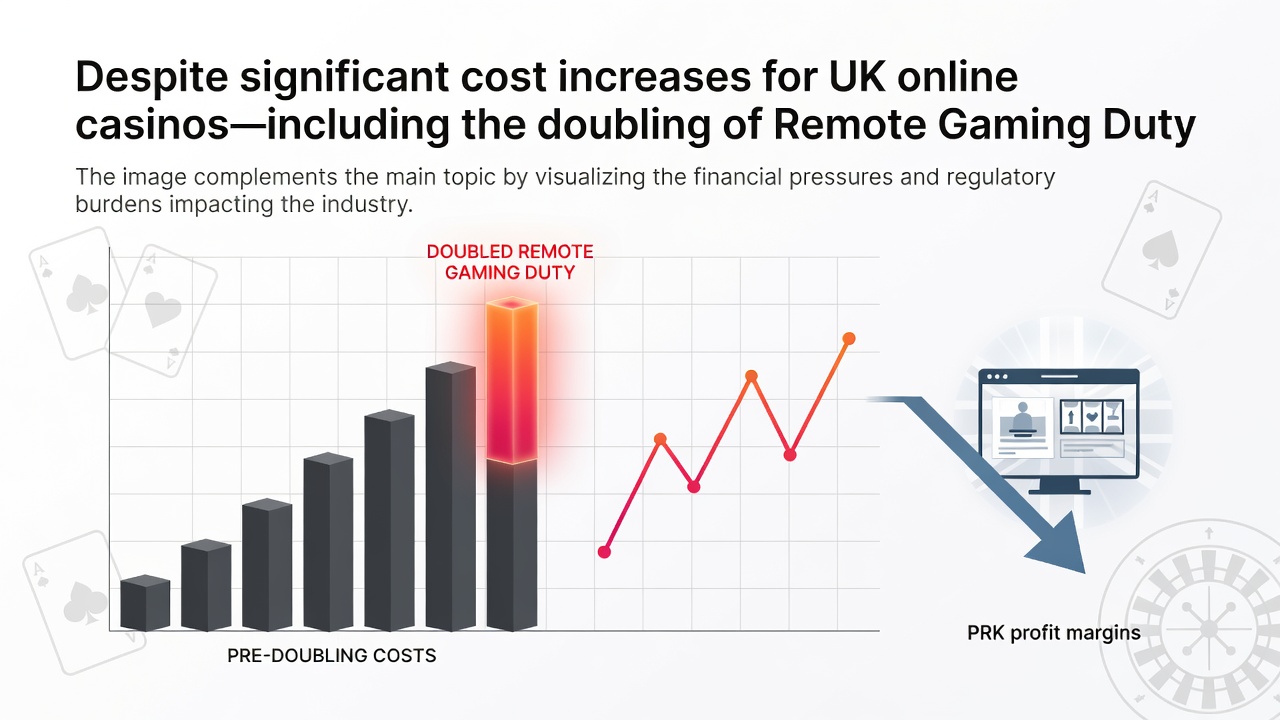
Observers note that new casino sites continue to appear in the UK market even as operators face higher expenses from April 2026 onward, when the Remote Gaming Duty doubles to 40 percent, and from October 2026, when Gambling Commission licence fees increase by 25 percent; slot stake limits and a statutory levy add further pressure, yet the pattern of fresh brand entries persists without interruption.
Experts tracking the sector point out that most of these newcomers operate as additional skins or white-label brands that sit under licences already held by established platform providers, a structure that holds marginal costs down while compliance work and core infrastructure remain centralised and shared across multiple sites.
Cost Pressures and Market Response
Data from industry monitoring shows the duty change alone lifts the tax burden significantly on remote gaming revenue, and the forthcoming fee adjustment raises the annual cost of holding a licence, yet launches recorded through the summer of 2026 have not slowed; platform operators absorb the fixed elements once, then allow partner brands to trade under the same umbrella at lower incremental expense.
Those who follow licensing records highlight examples such as Betcrown and 44aces, each introduced as fresh consumer-facing names that rely on the same underlying technology stack and regulatory approvals already secured by their host platforms, avoiding the full suite of setup and approval steps that would apply to an independent operator.
White-Label Structures in Practice
Platform providers handle player verification systems, payment processing rails, responsible gambling tools and reporting obligations centrally, which means each new skin can focus resources on marketing and user acquisition rather than duplicating back-office functions; this arrangement has become the dominant route for market entry during the period when statutory changes take effect.
Figures released ahead of the April 2026 duty shift indicate that the number of active remote licences has remained relatively stable at the operator level, while the count of distinct trading names has continued to climb, illustrating consolidation among licence holders alongside expansion in visible brands.
Analysts examining Gambling Commission registers note that the same handful of platform companies now support dozens of consumer sites, each with its own domain, design and bonus structure, yet all drawing on identical compliance frameworks; the model reduces duplication and spreads the impact of higher duty and fee rates across a broader revenue base.
Regulatory Consolidation Trends
Regulatory filings from the first half of 2026 reveal that several smaller independent operators have exited or merged into larger groups, while the total number of active gambling domains has held steady or increased slightly; this pattern aligns with the economics of shared infrastructure, where the cost of meeting the statutory levy and updated licence conditions falls once at the platform level rather than repeatedly for each brand.
Market participants who have studied the transition describe how a single licence can now underpin multiple trading styles, allowing rapid deployment of new sites once the core approvals are in place, and this approach keeps the overall number of launches consistent even as headline costs climb.
Implications for Market Entry
Industry reports covering the period before the October 2026 fee adjustment show that white-label arrangements have become the primary vehicle for testing new concepts without incurring separate licensing overhead; partners pay a revenue share or fixed platform fee instead of managing full regulatory compliance independently, which preserves capital for customer-facing activities.
Those monitoring the sector observe that the combination of higher duty, increased fees, stake caps and the levy has prompted efficiency measures at the infrastructure level, and the white-label route represents one direct response that sustains visible brand activity while the underlying licensee base consolidates.
Conclusion
The evidence compiled through mid-2026 indicates that the UK remote casino market continues to see new sites appear because platform-based licensing keeps entry costs contained for additional brands, even while the regulated sector experiences rising statutory obligations and structural consolidation among licence holders.
According to reporting on these developments, the structure supports ongoing market entry without requiring each new name to shoulder the full weight of the upcoming regulatory changes.