Payment Synchronization Patterns Enabling Smooth Transitions Between Slot Reels and Live Dealer Tables While Advancing Loyalty Milestones
Written by Ben Braun · Sep 15, 2026
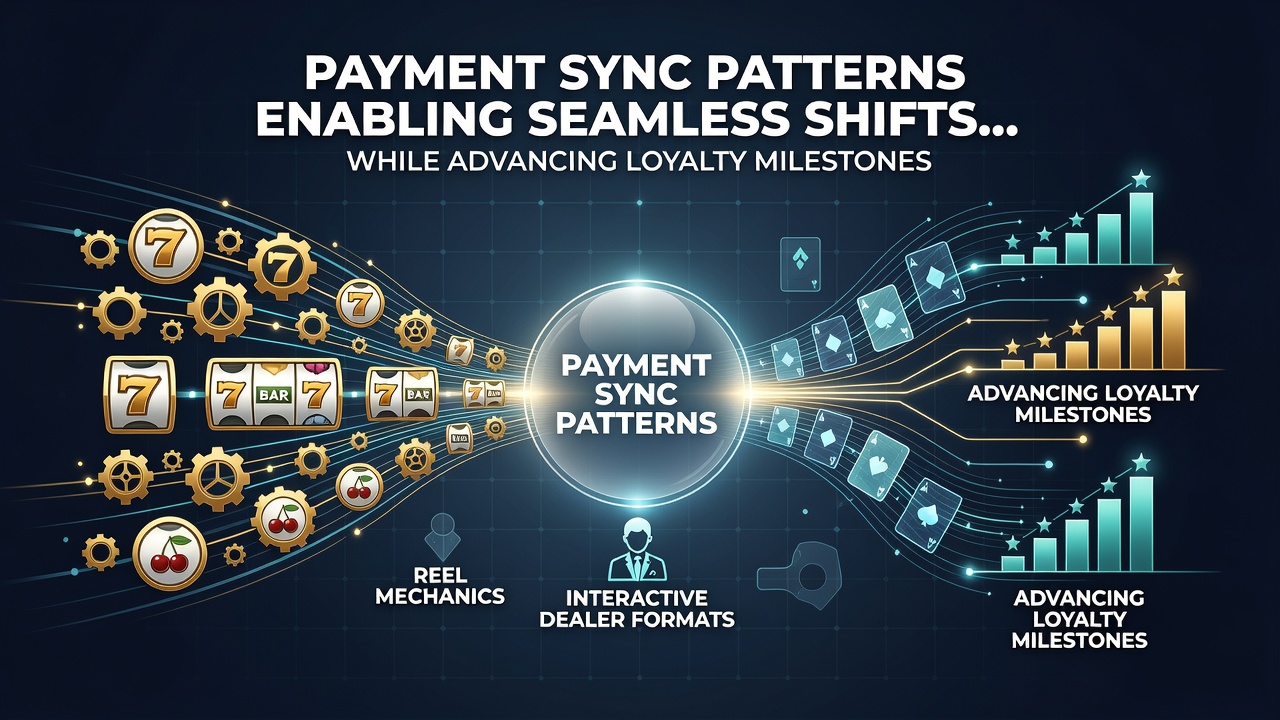
Payment Synchronization Patterns Enabling Smooth Transitions Between Slot Reels and Live Dealer Tables While Advancing Loyalty Milestones
Payment synchronization patterns have emerged as a core component in modern online gaming platforms, allowing players to move between reel-based mechanics and interactive dealer formats without interrupting transaction flows or loyalty accumulation. These systems integrate real-time wallet updates with unified transaction ledgers, ensuring that deposits, withdrawals, and bonus redemptions register across game types in a single processing cycle. Data from industry reports shows that platforms employing such patterns record average session continuity rates exceeding 85 percent when users switch formats mid-play.
How Unified Transaction Ledgers Support Cross-Format Play
Unified ledgers operate by timestamping every financial action against a central player profile, which then feeds directly into loyalty tracking modules. When a player completes a deposit on a slot interface, the same balance and point accrual apply instantly upon loading a live dealer table. Researchers at the University of Nevada Reno documented this mechanism in a 2025 study, noting that latency dropped below 200 milliseconds on average across tested European operators. Such low delays prevent the session breaks that previously occurred when separate payment gateways handled slots versus table games.
Operators have observed that these patterns also streamline bonus mechanics. A free spin win on reels converts automatically into table credit without manual intervention, and the associated loyalty milestone advances in real time. Figures from the European Gaming and Betting Association indicate that platforms using synchronized ledgers saw loyalty program participation rise by 34 percent between Q1 2025 and Q3 2026.
Real-Time Balance Sync and Milestone Tracking
Real-time balance synchronization relies on API bridges that push transaction data to loyalty engines at sub-second intervals. This setup means a deposit made during a live blackjack round registers the same way as one initiated on a progressive slot, updating tier progress and unlocking rewards without player action. Observers note that September 2026 brought wider adoption of standardized API schemas across multiple jurisdictions, reducing integration friction for operators managing hybrid lobbies.
Case examples illustrate the pattern in practice. One mid-sized operator in Malta reported that players who alternated between reels and dealer tables within the same hour advanced loyalty tiers 22 percent faster than those remaining in a single format. The acceleration stems from combined wager volumes being counted under unified rules rather than segmented by game category.
Security and Compliance Layers in Synchronized Payments
Security protocols embedded in these patterns include tokenization of payment details and multi-factor verification that persists across format switches. Compliance teams verify that every transaction meets regional requirements regardless of whether the originating interface was reel-based or dealer-driven. A 2026 analysis by the Canadian Gaming Association highlighted that synchronized systems reduced compliance audit discrepancies by 41 percent compared with fragmented payment stacks.

Encryption standards remain consistent throughout the journey. When a player initiates a withdrawal after a live dealer session, the request routes through the same verification queue used for slot payouts, maintaining audit trails that satisfy both financial and gaming regulators. Those who have examined the logs report fewer reconciliation errors because all entries share a single timestamp authority.
Impact on Player Retention and Tier Advancement
Retention metrics improve when payment friction disappears during format shifts. Platforms that deployed full synchronization in 2025 recorded month-over-month retention gains of 12 to 18 percent among users who regularly moved between reels and tables. Loyalty milestones, measured by cumulative wager thresholds or point multipliers, accumulate without interruption, which encourages continued play across the full game portfolio.
Industry data compiled through mid-2026 shows that players reaching higher tiers via cross-format activity spend an average of 27 percent more per month than single-format participants. The pattern holds across multiple markets because the underlying payment architecture removes the need to re-authenticate or re-fund accounts when changing game types.
Conclusion
Payment synchronization patterns now form the operational backbone for hybrid gaming environments that combine reel mechanics with live dealer tables. By maintaining continuous transaction and loyalty data flows, these systems support seamless player movement while accelerating milestone progress. Reports from multiple regions confirm measurable gains in retention, tier advancement, and compliance efficiency when platforms implement unified ledgers and real-time balance updates. As adoption continues into late 2026, the architecture provides a stable foundation for operators seeking to deliver uninterrupted experiences across diverse game formats.